Analytics Is Everywhere. But What Actually Matters?
Every operator today says they are “data-driven.” Every platform vendor sells dashboards, BI tools, or predictive insights. The word “analytics” has been used so much it has started to lose meaning.
The underlying growth, however, is real. The global online gambling market was projected to hit $35 billion in 2026. In the US alone, iGaming pulled in $976 million in a single month earlier this year, up 25% year-over-year. At that scale, running on intuition is not an option.
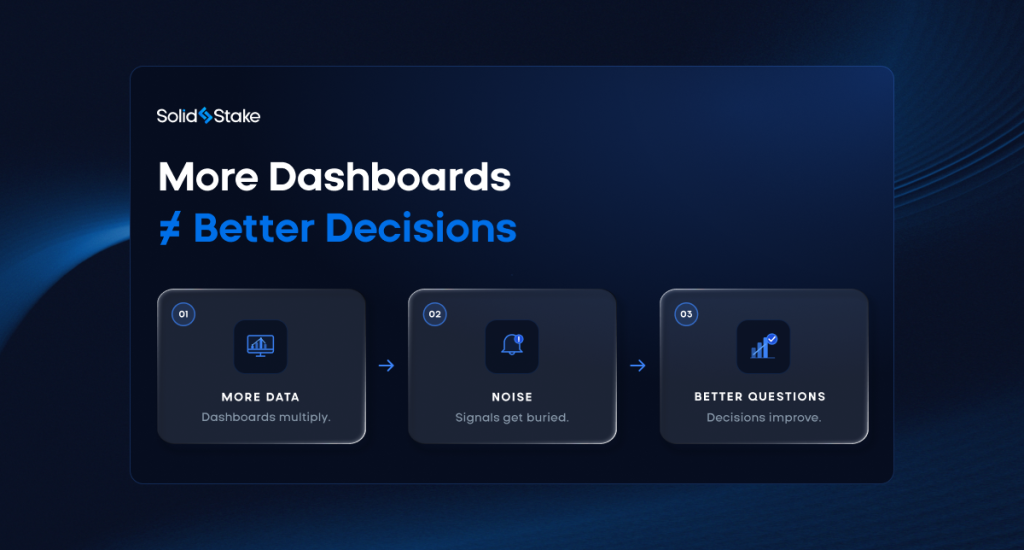
But the conversation around analytics is louder than the actual results. Having more dashboards does not mean making better decisions. The operators getting real value from data are the ones who know which questions matter, and what to do with the answers.
Here are five things every operator should know before treating analytics as a solved problem.
1. Acquisition Metrics Can Mislead You
Most operators still build their reporting around acquisition. Registrations, first-time deposits, channel performance. These numbers look clean and easy to present internally. They are also incomplete.
The problem is that acquisition measures activity, not durability. You can double your registrations and still lose money if retention drops in month two.
What actually shows whether a business is scaling is the relationship between two metrics:
- Player Lifetime Value (LTV): how much revenue a player generates over time
- Player Acquisition Cost (PAC): how much it costs to get them in the door
When LTV is well above PAC, growth compounds. When the gap narrows, the model gets fragile fast. The healthy benchmark most operators aim for is a 1:3 ratio. Every euro spent on acquisition should generate at least three euros of net gaming revenue over the player lifecycle.
This is why retention matters more than top-of-funnel numbers. A strong 30-day retention rate in iGaming sits around 70–80%, and acquiring a new player costs six to seven times more than keeping an existing one.
If your reporting still leads with acquisition, you are probably overspending on growth and underinvesting in the part of the business that actually drives long-term value.
2. Data Fragmentation Is the Real Bottleneck
Analytics depends on data. And in iGaming, data is rarely organized in a way that supports good decisions. It sits scattered across:
- The platform
- The CRM
- The payment gateway
- The KYC provider
- The game aggregators
- A long list of third-party tools
Each of these systems was built for its own job, not to feed a single analytics layer.
The result is a pattern most operators recognize. There is plenty of data, but no easy way to connect a player’s gameplay behavior to their payment friction, or their support tickets to their churn risk. Industry analysis consistently points to data silos as the biggest blocker to a unified view of player behavior. Even modern PAM systems run into the same issue, with siloed data between departments repeatedly flagged as a barrier to real-time decisions.
The quality of your analytics is almost always capped by the quality of your integration. Dashboards built on fragmented data produce fragmented insights. The operators getting the most out of analytics are the ones who invested early in unifying their data, not the ones who bought the most advanced reporting tool.
3. Predictive Models Only Work With Clear Use Cases
Predictive analytics gets the most attention in the category, and for good reason. Done well, it can:
- Spot high-value players early
- Flag churn risk before it happens
- Personalize offers in ways that boost engagement
The numbers back this up. Production case studies show a 10% reduction in player churn and a 5% increase in average player value after deploying predictive models for early intervention. AI-driven personalization triggers have been shown to cut churn by 17% to 41% depending on the market.
But prediction is not a magic layer that improves everything. It works when applied to specific, measurable problems. It fails when treated as a general capability.
The operators getting real value from prediction focus on a small number of clear questions:
- Which players are likely to churn in the next 14 days?
- Which players are showing early signs of VIP potential?
- Which incentives actually shift behavior, and which just subsidize activity that would have happened anyway
When the questions are sharp, the models deliver. When they are vague, the outputs look interesting but do not lead to decisions. Predictive analytics is a tool, not a strategy. The value comes from how it is applied.
4. Real-Time Only Matters When It Changes the Decision
Real-time analytics is one of the most heavily marketed features in the space. The pitch makes sense. If you can see what is happening on your platform at the moment, you can respond faster and personalize better.
In some areas, that is genuinely valuable:
- Fraud detection – more than half of operators already use machine learning for near real-time fraud prevention
- Responsible gambling interventions – early signals matter
- Bonus abuse monitoring – delayed detection means lost revenue
- In-session personalization – a relevant offer at the right moment beats one sent the next morning
But real-time is not always better. A lot of decisions, like VIP program design, bonus strategy, game portfolio optimization, or channel allocation, are made on weekly or monthly cycles. Building real-time infrastructure for decisions that do not need it just adds cost and complexity.
The better question is simple: does this decision change if we get the data ten seconds later? If the answer is no, real-time is a feature, not a requirement.
Operators who treat all analytics as real-time tend to overinvest in infrastructure and underinvest in the actual analysis.
5. Analytics Is Now a Compliance Requirement, Not Just a Growth Tool
For most of the past decade, casino analytics was framed as a growth lever. That framing is becoming outdated. Regulators now expect operators to use behavioral data to identify at-risk players and intervene in real time.
The shift is showing up across major markets:
- The UK Gambling Commission, the Dutch KSA, and several US state regulators have either mandated or strongly pushed operators toward machine learning systems that detect at-risk behavior
- Pennsylvania’s Gaming Control Board now requires quarterly reports on AI-driven intervention rates
- The UKGC’s affordability check framework, rolled out in early 2026, forces operators to run frictionless financial risk assessments on players who hit defined deposit thresholds
This changes the analytics conversation in two big ways.
First, the same behavioral data driving retention and personalization is now also driving compliance. The systems cannot be separated anymore.
Second, analytics infrastructure has to be transparent and auditable. Regulators expect documentation of training data, model validation, and escalation protocols. Black-box models are getting harder to operate in regulated markets.
The takeaway is straightforward. Analytics is no longer optional, and it is no longer just about growth. It is part of the license to operate.
What This Means for Operators
The casino analytics conversation has matured. The question is no longer whether to invest in data, but how to do it in a way that actually moves the business.
The operators getting the most out of analytics tend to share a few habits:
- They prioritize retention metrics over acquisition vanity
- They invest in unified data infrastructure before chasing advanced models
- They apply prediction to clearly defined problems
- They use real-time only where it changes a decision
- They treat compliance as part of the same analytics stack, not a separate silo
Analytics is not a feature anymore. It is the operational layer that connects acquisition, retention, compliance, and growth. The operators who treat it that way will compound their advantage over time. The ones who keep treating it as a reporting function will find that even the best dashboards do not change outcomes on their own.
In the end, analytics in iGaming is not about having more data. It is about asking sharper questions, and building the infrastructure to actually answer them.